1837 Railway
The opening of the London to Birmingham railway in 1837 heralded a new age.
“20th July 1837 saw the opening of the pioneer London to Birmingham railway. Watford was transformed from small country market town to a London Satellite. This line was 112.5 miles long, which at that time was the longest continuous stretch of railway to be found anywhere in the world.”
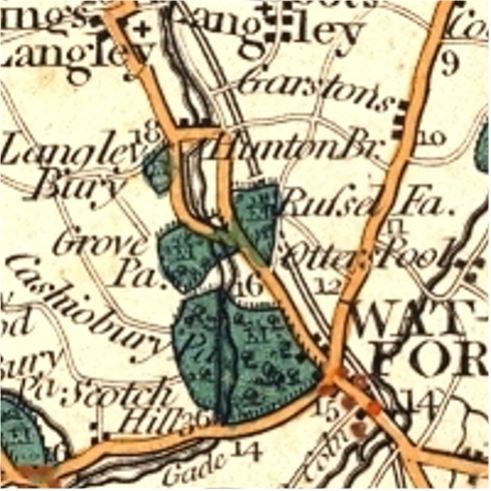
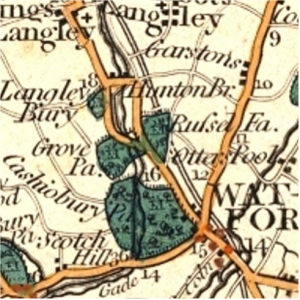
“Watford’s first station was not on the site of the present one. The most direct route would have been through the grounds of Cassiobury and the Grove. This was not popular with the Earls of Essex and Clarendon so the line swept in a quarter circle around the town” (Railway)
1835 Tunnel Disaster
While constructing the London to Birmingham railway in July 1835 there was a catastrophic disaster in the Watford tunnel. The route of the railway through Watford involved an acute curve, a deep cutting and expensive tunnel as the implacable opposition to the railway by the Earls of Essex and Clarendon meant that George Stephenson’s original route through West Watford, into the Gade Valley beside the Grand Junction Canal was vetoed by the landowners.
The London and Birmingham Railway (Roscoe and Lecount 1839) describes:
“one of the shafts of the tunnel of the intended railroad to Birmingham, which runs through the Earl of Essex’s estate, at Russell Farm Wood, about two miles beyond Watford, had fallen in, and been attended with an immense sacrifice of human life”
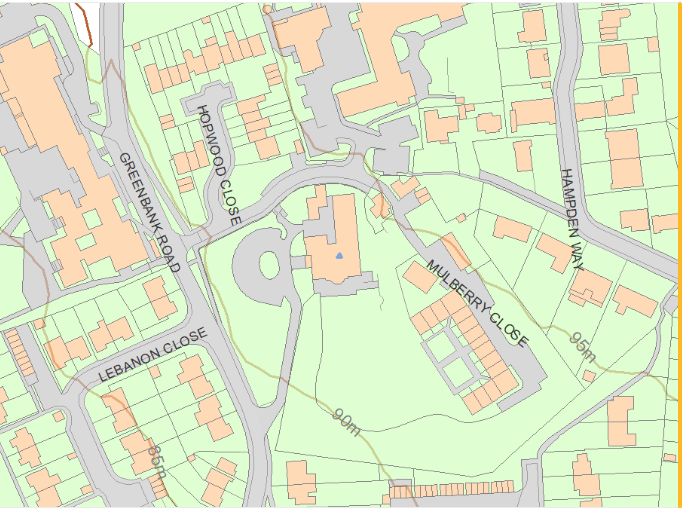
On 17th July 1835 between five and six o’clock in the morning, a team of eleven men, five bricklayers and six labourers, bricking up a section of the tunnel that runs under Goodwood recreation park just by the Minerva Drive entrance, were buried alive.
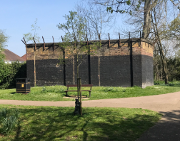
The collapse caused an abyss about 35 feet deep and 40 feet long. The men were estimated to be buried 100 feet below the surface of the earth. Although 60 men were actively engaged in digging out the bodies, more than a month passed before the unfortunate men were successfully located. The air shaft can be found in Goodwood Park.
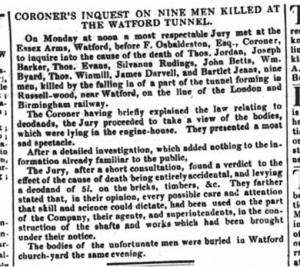
The inquest was held August 1835 at the Essex Arms, Watford.
There are many books and newspaper reports that describe what happened in 1835 – and the subject justifies a book in its own right.
The same book explains that the accident was caused by the chalk and gravel combination in the area.
“gravel is most abundant in the neighbourhood of Watford, covering the upper chalk which in many places it penetrates, or in other words, the large fissures or rents in the chalk are filled with the gravel, and as this latter material was very loose and mobile, it was the occasion of much difficulty and danger in the excavation of the Watford tunnel”
“The land through Watford is predominantly chalk, but is rent by gravel-filled fissures as much as one hundred feet deep. This made tunnelling very dangerous as the ‘for at times, when the miners thought they were excavating through solid chalk, they would in a moment break into loose gravel, which would run into the tunnel with the rapidity of water, unless the most prompt precautions were taken.”