1902 Estate Sold
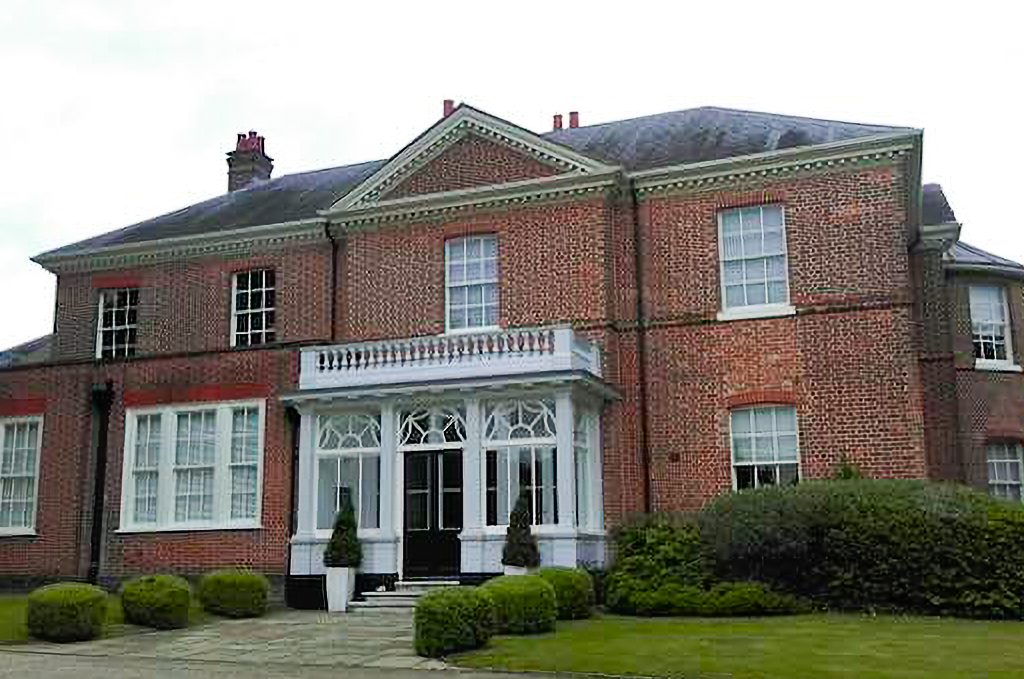
In 1902 the Earl, by then in considerable debt, put the Estate up for sale. The advertisement which appeared in the Herts Advertiser in May described;
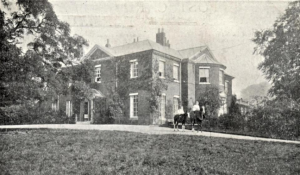
“beautifully wooded, undulating lands, together with a superior old-fashioned mansion-house, standing on high ground in the centre of the park, approached by a long winding carriage drive, and containing square hall, four handsome reception rooms, eleven bedrooms, and well-arranged domestic offices: stabling for seven, coach-house, etc. The pleasure gardens are of a delightful character, with spacious tennis and croquet lawns, shrubberies, and picturesque wood walks, an excellent walled kitchen garden, with glasshouses, etc., four cottages, and a range of farm buildings.”
Note: There is no evidence that the 1902 Russell Farm sale resulted from new taxes but across the country times were changing – “Most significant of all was the new taxation on inherited capital in 1894 – known then as death duties – at first set at 8% on estates worth more than £1 million. These developments accounted in part for the loss of some country houses before the First World War.”
1902 Lewis Evans
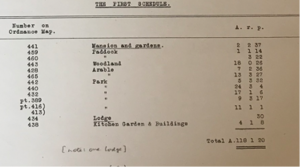
In November 1902 the Earl sold the 118 acre Estate (shaded red on the plan) to Lewis Evans (1853-1930) for £18,500.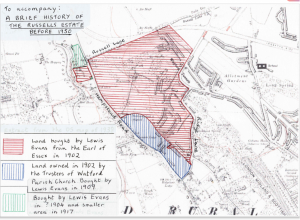
Evans was managing director of John Dickinson’s paper-making business and a noted collector of scientific instruments. His brother was the more famous Sir Arthur Evans, a celebrated archaeologist.
Note -The Turnbull autobiography mentioned earlier includes references to Lewis Evans many years before he bought Russell Farm.
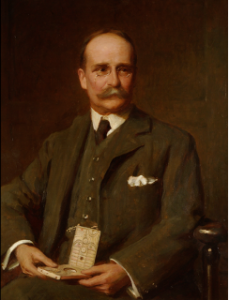 “Lewis Evans was born in Hemel Hempstead into a family that belonged equally to the intellectual world and the world of business. Several ancestors and kinsmen on his father’s side had been distinguished scholars, writers, or mathematical scientists; his mother was a daughter of John Dickinson, founder of a well-known paper and stationery manufacturing company. Sir John Evans was one of those capable Victorians who seemed able to shine in both worlds. He assumed the management of John Dickinson & Co. and kept it in a flourishing state; he became an authority on water supply and hydraulic geology (on which his paper mills depended); and he chiefly achieved distinction as an archaeologist, with special knowledge of numismatics. His first two sons were educated at Harrow School, but after that their careers diverged. The eldest, groomed as the father’s intellectual successor, went on to university and a glamourous archaeological career; this was Sir Arthur Evans, famous excavator of Knossos and Keeper of the Ashmolean Museum. As the second son, Lewis was groomed as the father’s business successor, and in 1871 entered the paper-making business, eventually becoming its managing director.”
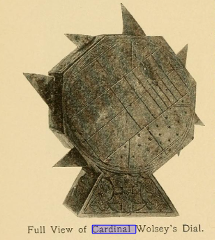 “In truth, Lewis Evans (1853–1930) was the Sundial Man; his greatest interest and the overriding theme of his collection was sundials.”1www.hsm.ox.ac.uk/lewis-evans-biographical-account
“The most interesting English portable dial in existence is now owned by Lewis Evans, Esq., of Russell Farm, Watford, England. It was once the property of Cardinal Wolsey ; and it is without doubt the only existing dial made by Kratzer ; in design and workmanship it is worthy that great master”
“Fire fighters at the mill became a very important department due to the increasing amount of paper production and the growing size of the site. Dickinson’s first official private fire brigade was est ablished at Nash Mill in 1883 founded by Lewis Evans, grandson of John Dickinson. There was however fire fighting equipment prior to this at all the mills.”
Chairman of Watford Football Club – Paperwork related to Watford’s incorporation as a limited company in 1909 reveals the identity of ‘L. Evans’ (as listed in the Centenary History), and further research within the Watford Observer archives confirms that he served for much longer as chairman than previously thought. On a share prospectus within these papers, acquired by the Watford Museum in 2021, Lewis Evans is recorded as one of the directors of the football club at the time of the formation of the limited company. Crucially, the document also records that he was, at that time, a director at John Dickinson & Co., Limited.
The history of the Estate after 1902 can be summarised as follows:-
April 1904
Lewis Evans bought additional land for £600. This was possibly about 3 acres to the north of the kitchen garden on the west side of Hempstead Road opposite Russell Lane (shaded green on the plan).
March 1909 Church Lands added to the Estate:
Evans spent a further £7,500 to acquire the approximately 28 acres of land owned in the 1840s by the parish of Watford mentioned above (shaded blue on the plan).
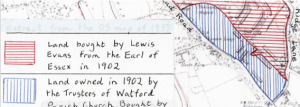
Church Lands purchased by Lewis Evans were one of a number of properties owned by the parish of Watford, the income from which was used to maintain St. Mary’s Church and for charitable purposes. The earliest reference to the land seems to have been in 1657 when a document referred to “Three closes of arable land called Church Lands containing by estimation 20 acres adjoining to a lane called Reads Lane [Ridge Lane]“.
In 1832 Commissioners investigating church affairs reported
“There are certain lands in the parish of Watford called the Church Lands……three closes of land let for 21 years on 16 December 1808 to George, Earl of Essex abutting on the highway from Watford to Hemel Hempstead, viz. Russell Farm. Upper Churchlands [is] in Ridge Lane. A number of stones marked with Church Lands or a good pale or other fence denote the exact boundaries. A quickset or other hedge with a deep ditch to be made in the room of the hedges cut down and taken away in the former lease made to the late Countess Dowager of Essex”.
The apportionment accompanying the 1844 tithe map recorded that Charles Pearse, then living at the mansion, was occupying two fields owned by the parish of Watford, described as a meadow and Church Lands. The former was 18 acres, 2 roods and 33 perches in extent, the latter 9 acres, 3 roods and 1 perch ( 40 perches = 1 rood, 4 roods = 1 acre or 4840 square yards). They were numbered 873 and 875 respectively on the tithe map. For additional information on tithe maps
In 1884 Henry Williams’ History of Watford informed its readers that the church estate included
“eight acres three roods and two perches of arable land, and nineteen acres three roods and thirty-eight perches of meadow land lying contiguous to the turnpike road [Hempstead Road] leading from Watford to Berkhampstead, St. Peter’s, on the north-east………..The rents of these estates have been usually applied to the repairing, ornamenting, and upholding the parish church; but it is not known how, or by whom, they were originally given to the parish”
In April 1907 the Charity Commissioners authorised the trustees of the Church Lands to sell at any time within two years, and at not less than £7,500, the 28 acres, 3 roods and 15 perches. The sale to Lewis Evans was duly completed on that basis in March 1909.
(According to a newspaper advert in 1909 Evans tried to sell – and presumably failed.)
1911:
The census form completed by Lewis Evans listed his household as himself, his wife Eva Fanny, three unmarried daughters and eight servants. The mansion was stated to have 30 rooms.
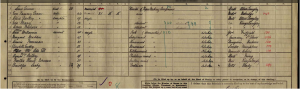
1913
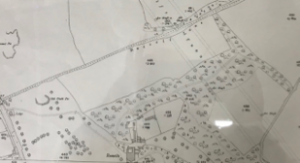
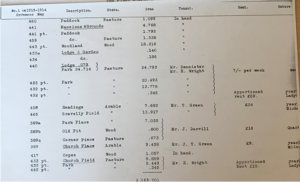
In January 1913 a national survey of property recorded that Lewis Evans was letting 30 acres of arable and grassland on the Estate to Benjamin Green for £22 per annum, while James Darvill was renting a further 9 acres for £16 a year.
1919-1920 Phillipsons
For a short period in 1919-1920, according to the electoral registers, members of the Phillipson family were in residence, Mrs. Phillipson in 1919, and her son Thirwell in 1920. They were the family of Ronald Phillipson, who died in 1906. Phillipson was descended from Philip de Thirlwall of Thirlwall castle and the Philipson family were famous for coach and train carriage building, and as solicitors and Aldermen of Newcastle. However they were also famous for their philanthropy.
“After his death Louisa moved between Tynemouth and a house in Park Lane, London, and it was there that Vera was married in 1927 to Eustace F. Moyes, a Flight Commander with the Royal Naval Air Service in WWI. Hylton became a Captain in the Scots Guards and stood as a candidate for Conservative MP several times. His wife, comic actress Mabel Russell, achieved a political career as Unionist MP for Berwick from 1924-1929, and was one of the first female MPs in the House of Commons (see the Berwickshire News and General Advertiser for Tuesday 21 October 1924). Roland Thirlwall became a Captain in Coldstream Guards during the First World War. Thirlwall became a Major in the Life Guards, and, like many other members of the family, was president of the Northern Counties Orphanage. He married and divorced actress Nellie Briercliffe, and later married Daphne Gladstone.”
Demise of the country houses
“In this dark era, houses languished on the market. This was often evidenced by adverts for the same properties appearing with sad regularity in magazines such as Country Life. It brought reminders of the increasing threats to the established order of the countryside into the drawing rooms and libraries of those most at risk.
“Some country houses were swept away with another social earthquake prompted by the end of the war. Between 1919 and 1921, about a quarter of the land in England and Wales changed hands – the most radical shift of land ownership since the dissolution of the monasteries.
A brief postwar land price boom after years of depression had encouraged many large landowners to sell, often to their former tenant farmers. In cases where the lands had been dispersed, there was often no need for the house any more.”
1920 Russell Farm Sale
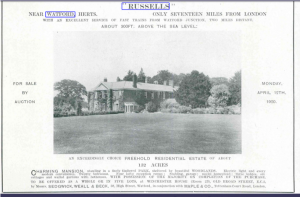
April 1920: The Uxbridge and West Drayton Gazette advertised the sale by auction of the contents of Russells House and gardens.
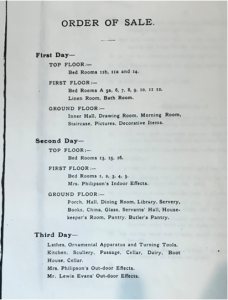
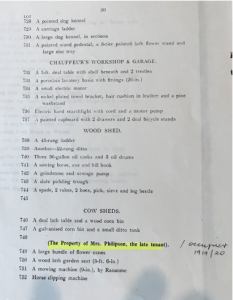
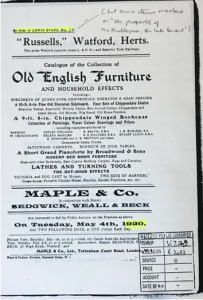
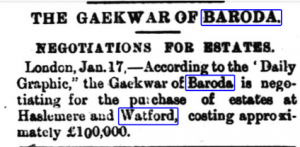
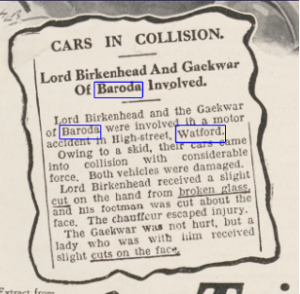
Lewis Evans also sold the rest of the Estate to the Maharajah of Baroda (1863-1939) at this time, following the auction in April.
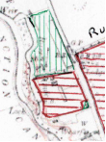 In June 1920: Lewis Evans sold the 7 acres of the Estate lying to the west side of Hempstead Road (shaded green and red on the plan) to Thomas Rubithon Clark and Arthur Kingham, both of Watford, for £2,550. Evans was by then living in Sidmouth (he later moved to Dawlish where he died in 1930).
1920 Maharajah of Baroda
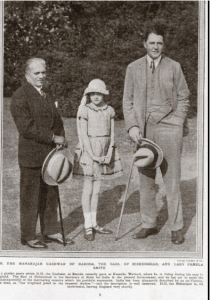 The Maharajah is one of the most ‘famous’ occupants despite owning the house for only 5 years and having only spent a short period at the house each year.
July 1925: The Tatler magazine published a photograph of the Maharajah at Russells with the then Secretary of State for India: India then being under British rule.
“Maharaja Sayajirao Gaekwad III of Baroda (1863-1939) was one of the longest-serving and most controversial Indian princes to reign during the British Raj. He was the product of his father the first Raja of Baroda’s morganatic marriage that technically disqualified he and his brothers from the line of succession. He was born in the reign of Maharaja Khanderao Gawkwad II who was a popular ruler of the third wealthies Indian nation state.”
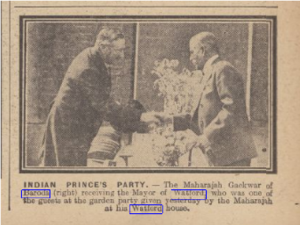 During his residence in Russell’s House, he made the acquaintance of many of the British aristocracy and was known for throwing lavish parties in the gardens of the estate and for the stable of fine racehorses he kept.
1925 Andrew Richard Motion
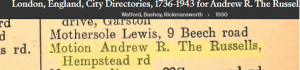
October 1925:
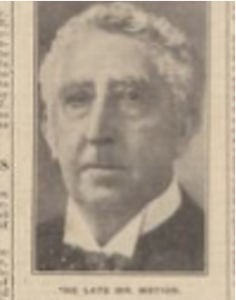 Motion was managing director of the Canon Brewery before being appointed its chairman in 1895. He and his family do not seem to have moved into the mansion until 1927. In his obituary some years later the Essex Chronicle explained. “Mr Motion retired to Upton House, Warwickshire, where he remained until 1927 and after a short stay in Hertfordshire he returned to Essex”
January 1926:
The Western Times confirmed that the Bath and West Show would be held from 25th to 29th May that year at Russells with prize money of £4134.
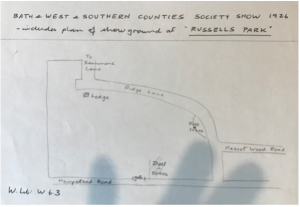
“The First Important Agricultural Show of the Year Attracts but Few Manufacturers. Some New Ideas Exhibited.
THE Bath and West and Southern Counties Society, now in the 149th year of its existence, held its annual show last week in the fields of the Russell’s Estate, about a mile out of Watford on the main road to Aylesbury. The Russell’s was, until recently, in the possession and occupation of the Aga Khan. The “Bath and West” show (as it is generally termed) ranks second in importance to the “Royal” show (that of the Royal Agricultural Society of England) and this year it has been brought far from the home centre of the Society’s “activities.”
1930 Sale
The Estate, including the mansion, was put up for sale by Andrew Motion, with an asking price of £60,000 for the approximately 143 acres it then extended to. The estate agents handling the sale described it as “without doubt one of the finest residential properties near London”. There was no quick sale, but in its edition of 18 July 1931 the Watford Observer reported that land agents –
“Messrs. Percy Harvey announce that they have negotiated the purchase of the Russells Estate, 143 acres, for a client with a view to development. The property has over 9,000 feet of existing public road frontages and includes the well known residence with charming gardens and grounds”.
By then Andrew Motion had been judged no longer mentally capable of managing his own financial affairs. Accordingly to protect his interests, Motion’s actions required the approval of a quaintly named official called the Master in Lunacy. That gentleman approved the sale of the Estate for £34,000 to none other than the land agent Percy Portway Harvey. The sale was completed in December 1931.
Note – his great grandson, also Andrew Motion, was Poet Laureate from 1999 to 2009.
“Sir Andrew Motion FRSL is an English poet, novelist, and biographer, who was Poet Laureate from 1999 to 2009. During the period of his laureateship, Motion founded the Poetry Archive, an online resource of poems and audio recordings of poets reading their own work.”
1931 Percy Portway Harvey
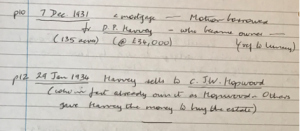 Behind the scenes, the money to fund Harvey’s purchase of the Estate had been put up by Charles J. W. Hopwood, Eustace E. Goodrich, Benjamin A. Woolf and Louis B. Woolf. They evidently used the next just over two years to draw up plans for the development of the Estate before, at their request, Harvey conveyed the Estate to them in January 1934.