1939-1945 – Second World War – Housebuilding
The Second World War here, as elsewhere, soon halted the sale of plots of land and residential building – as all available labour and materials were needed for the war effort. Both only resumed when the war ended.
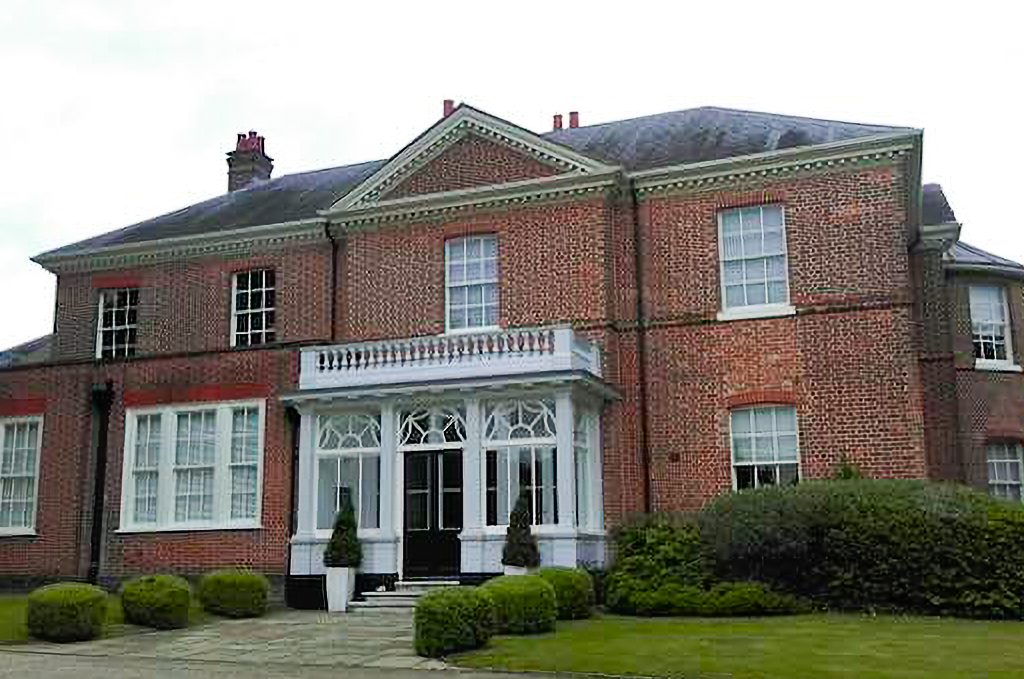
“During the Second World War many of the country’s stately homes were requisitioned, to host everything from schools to military headquarters, from convalescent hospitals to war supply depots. For example, Chatsworth House became home to the girls of Penrhos College, their school having itself been requisitioned by the Ministry of Food. The Air Ministry requisitioned Hughenden Manor where one hundred people worked on the production of detailed maps for the Airforce.
At the end of the Second World War, requisitioned homes were often returned in a dilapidated state and owners were facing a bleak choice. Some had already sold off their assets in auctions and others were selling up completely. Since the turn of the century, it is believed around 1200 country homes were demolished in England alone, reflecting the end of an era for many”
Many of the country’s stately homes were affected by the war:
“During the Second World War many of the country’s stately homes were requisitioned, to host everything from schools to military headquarters, from convalescent hospitals to war supply depots. For example, Chatsworth House became home to the girls of Penrhos College, their school having itself been requisitioned by the Ministry of Food. The Air Ministry requisitioned Hughenden Manor where one hundred people worked on the production of detailed maps for the Airforce.
At the end of the Second World War, requisitioned homes were often returned in a dilapidated state and owners were facing a bleak choice. Some had already sold off their assets in auctions and others were selling up completely. Since the turn of the century, it is believed around 1200 country homes were demolished in England alone, reflecting the end of an era for many”
Post War Building
At the outbreak of the second world war the government had quickly taken legal powers to restrict civilian building work in order to divert labour and materials to the war effort. As a result house building all but ceased for over five years. By 1945 as a consequence there was pent up demand for new homes, a backlog of routine repairs to existing houses and bomb damage to be made good. In total over 200,000 homes had been destroyed by aerial bombing raids.
One solution to the need for more homes were prefabricated buildings or ‘prefabs’. Prefabs were intended as an interim solution to the housing shortage until the country could return to constructing permanent homes with traditional building materials. Usually built in sections in factories, they could be speedily bolted together on site and required little or no foundations. Prefabs were only scheduled to last for 10 – 15 years, but of the 156,623 erected between 1946 and 1949 it is estimated that between 1000 and 2000 are still lived in
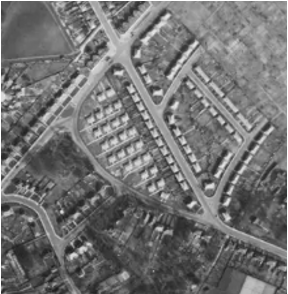
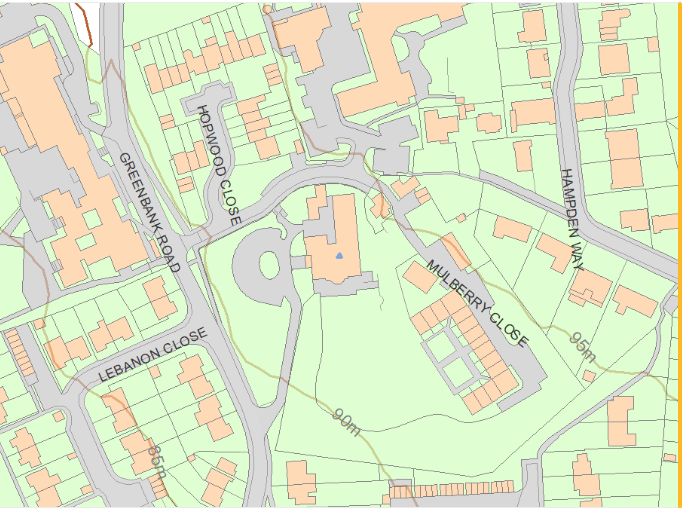
There is no evidence that any prefabs were built on the Estate itself, but some two dozen or so were erected on the site of Hollytree House, at the junction of Gammons Lane and Courtlands Drive.
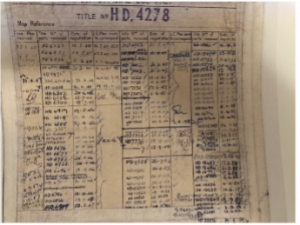
Deed HD 4278, available from the Herts Archive and Local Studies, shows how the land was sold off in parcels from 1940 through to 1978.
January 1941
In January 1941 Russells (Watford) Estates Ltd. sold what is now the “Service Road” and grass verge parallel to the main Hempstead Road (A 411) to Watford Borough Council.
Nayela, The Drive – built 1948 – 1950
One of the plots was used to build Nayela on The Drive.
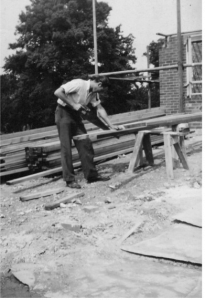
This house illustrates some aspects of post war building on the Estate. Bryan Wright, father of the present owner, bought the site, then simply plot 54, from Russells (Watford) Estates Ltd in 1948 for £320. Bryan was a plumber by trade and had served in the RAF during the war. With the need to resume house building as soon as possible his skills were in demand so after the war ended he was demobilized from the armed forces early.
Bryan’s intention was to build Nayela himself as a family home in anticipation of his marriage. He taught himself bricklaying, electrical work and other necessary skills. Today many of these tasks should only be carried out by suitably qualified and registered tradespeople, but in 1948 there were no such restrictions. Working at weekends and evenings, he built Nayela between 1948 and 1950 with some help from friends and family.
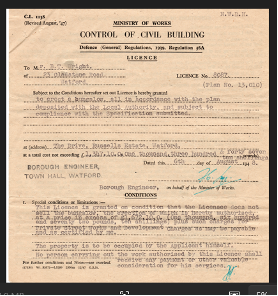
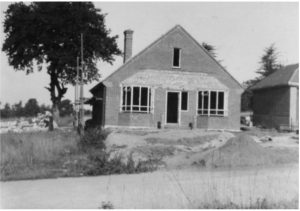
Having purchased the plot outright, Bryan obtained a mortgage fom the Halifax Building Society to finance the build. The Society then advanced the money in installments as the work proceeded. Bryan kept a detailed record of spending. The total cost, excluding the plot, was £1173 – 10s – 9d (£1173 – 54p).
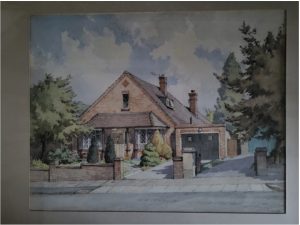
Nayela: Water colour by Albert Taylor painted in 1975. Albert was a neighbour on The Drive.
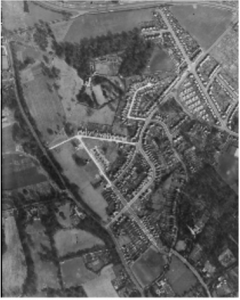 An aerial photo from 1947 shows how the area had developed. Available from Historic England